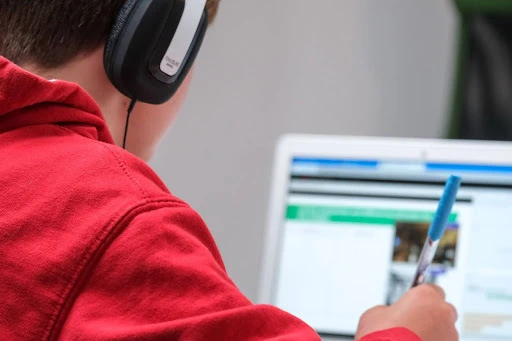
Education for Flourishing: Why Inner Development Must Become Central to Learning
Aline Ribas, PhD, ISSP-SA

How do we cultivate these capacities in the first place?
Today’s education systems—formal, professional, and lifelong—are under immense pressure. We live in a world defined by disruption: technological acceleration, ecological destabilization, social fragmentation, and economic uncertainty. Yet our learning models still prioritize information over integration, performance over presence, and technical skill over human wisdom.
The challenge isn’t just preparing people for the future of work—it’s preparing them for the future of humanity.
Education needs not just more content, but more consciousness.
This article explores why inner development must become central to the future of education—and how the Inner Development Goals (IDGs) offer a coherent, evidence-informed framework for cultivating the qualities that enable learners of all ages to navigate complexity, relate with empathy, collaborate with trust, and act with ethical clarity.
Education for Flourishing
Education is often described as the foundation of a better world. Yet in many systems, that foundation is showing cracks. Students are trained to compete, perform, and produce — but rarely to reflect, connect, or care.
We graduate young people —and our future leaders—with technical skills, yet often without the inner capacities that enable them to navigate life with wisdom, such as:
Self-awareness
Empathy
Ethical clarity
Resilience
In an era of climate instability, social division, and profound uncertainty, this approach is no longer sustainable. We don’t just need smarter students—we need wiser humans, capable of engaging life and society with insight, compassion, and courage.
The Limits of Traditional Education
Across the world, education systems prioritize cognitive performance — grades, standardized tests, and measurable outputs. These matter. But they often crowd out the emotional, ethical, and psychological foundations of flourishing.
Students may learn to solve equations yet struggle to resolve conflict; they may memorize facts yet lack the ability to understand their own values. They may be prepared to succeed, but not to thrive.
This isn’t accidental. It reflects a widespread blind spot: the belief that inner development is “optional.” It is essential.
The Inner Development Goals in Education
Just as the Inner Development Goals (IDGs) provide a roadmap for transformative leadership (as discussed in Article 4), they also offer a framework for reimagining education—helping learners develop the inner capacities essential for navigating life and society.
Each dimension translates into practical skills and qualities that can be cultivated across learning contexts:
BEING — Self-awareness, presence, integrity, and openness to learning. Students learn to reflect on their values, understand their emotions, and develop an inner compass that guides decisions.
THINKING — Critical, systems, and ethical thinking; creativity; long-term visioning. Learners develop the ability to see multiple perspectives, evaluate information thoughtfully, and approach challenges with imaginative solutions.
RELATING — Empathy, compassion, humility, and appreciation. Education nurtures students’ capacity to connect with others, listen deeply, and engage in respectful dialogue across differences.
COLLABORATING — Co-creation, conflict resolution, inclusive mindset, and relationship-building. Learners develop skills to work effectively in teams, navigate disagreements constructively, and contribute meaningfully to group projects.
ACTING — Courage, resilience, civic engagement, and purpose-driven action. Students gain the confidence and perseverance to apply their learning ethically, take initiative, and contribute positively to their communities.
These qualities are not abstract ideals—they are trainable, measurable, and directly applicable in classrooms, schools, and lifelong learning contexts. The IDGs don’t replace academic rigour; they enrich it, preparing students not just to succeed, but to thrive as thoughtful, wise, and compassionate humans.
Examples from Around the World
Educators globally are already planting the seeds of inner development:
🇫🇮 Finland integrates emotional literacy from early childhood.
🇧🇹 Bhutan uses the Gross National Happiness framework in its curriculum.
🇨🇦 Canada adopts Indigenous pedagogies to emphasize relationality and community wisdom.
🌍 International schools use the IB Learner Profile to foster inner growth alongside academics.
These examples show that cultivating inner capacities is not theoretical—it’s happening now, with tangible benefits for students and communities alike.
Inner development is no longer a luxury. It is a strategic necessity for preparing students to lead in a complex world.
From Oversight to Insight
Reimagining education means shifting from oversight — where inner capacities are invisible — to insight, where they are intentionally cultivated.
The classroom must evolve from a place of instruction into a place of transformation.
In the sixth and final article of this series, we’ll bring these insights together into a new paradigm for human development — one that bridges systems and souls, restoring the moral and psychological foundations of flourishing.